Regional resources, made visible.
A central focus of LocLab is researching and making visible regionally available, renewable and circular materials. South Tyrol has great potential in natural raw materials as well as craft expertise that can be used for sustainable, resource-efficient building. At the same time, regional production processes generate valuable by-products and residues whose potential often remains untapped.
Within the project, innovative material solutions are developed and tested. These materials are scientifically examined with regard to their technical performance, their environmental impact and their contribution to the circular economy.
In addition, the project maps and documents regional circular resources. Renewable and circular materials, their availability, locations, processing expertise and relevant actors are recorded systematically. The aim is to make existing material cycles visible, strengthen local value chains and promote knowledge transfer between research, business and society.
The results are prepared as material maps, material passports and a growing material collection. This creates a valuable knowledge base for future research, building and design projects and contributes to the sustainable use of regional resources in South Tyrol.

The material collection.
The material passport documents regional, renewable and circular materials with their building-physics data, their origin and their circularity. The collection will grow to 16 materials over the course of the project – here is a first excerpt.
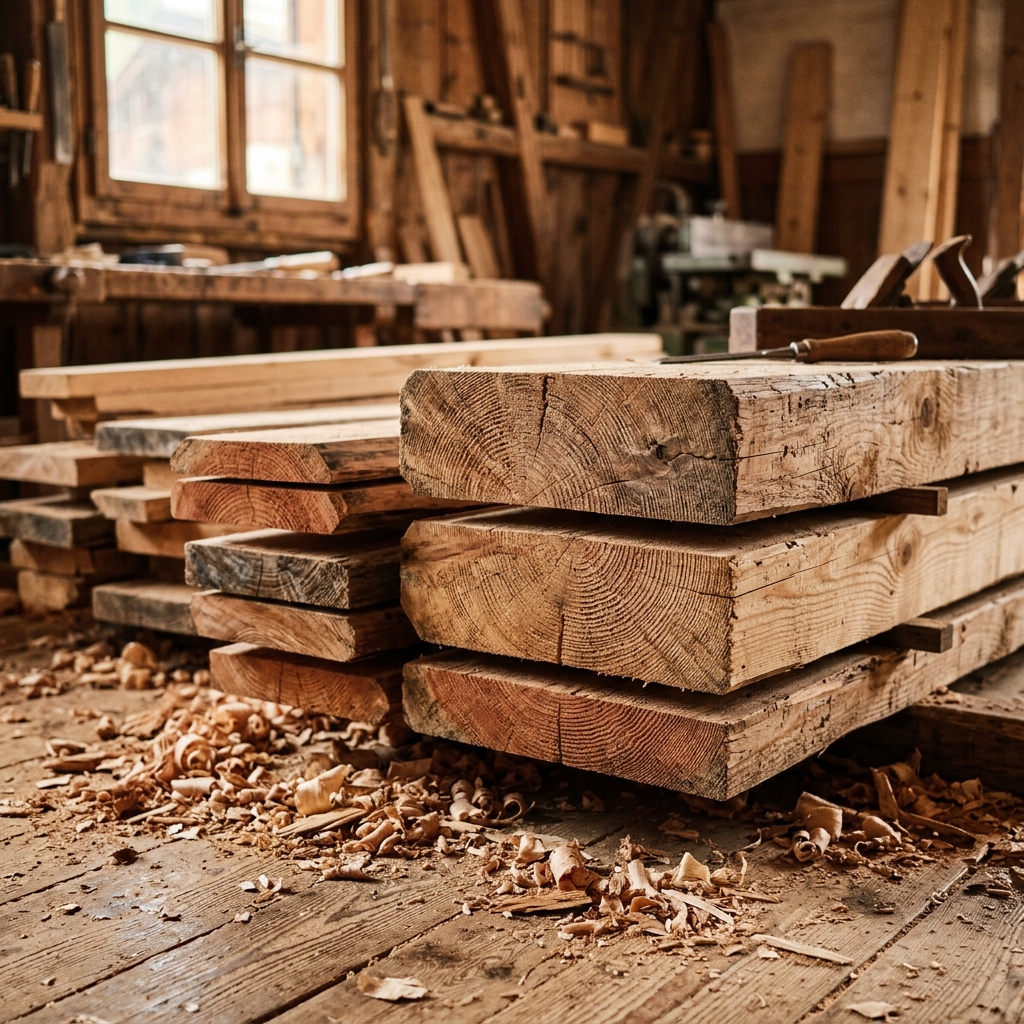
Wood
Spruce · Larch · FirSouth Tyrol is densely forested. Wood from local forestry is the central building material – as solid timber, cross-laminated timber or in the almost glue-free LokHaus+ system. Short transport distances, high CO₂ storage and full reusability make it the backbone of the project.
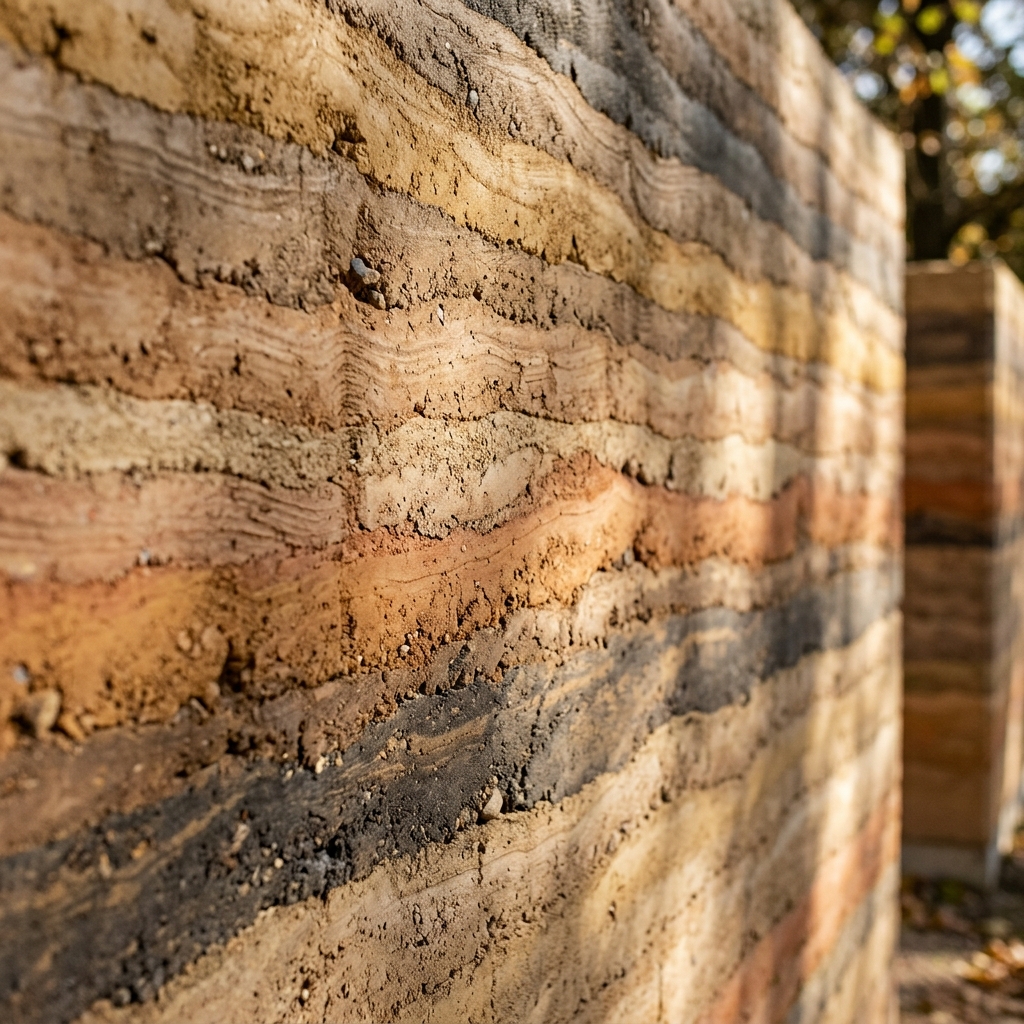
Clay
Rammed earth · Clay plasterClay naturally regulates indoor humidity, stores heat and has proven itself in the Alpine region for centuries. It needs no energy-intensive firing and can be fully returned to the earth at the end of its life.
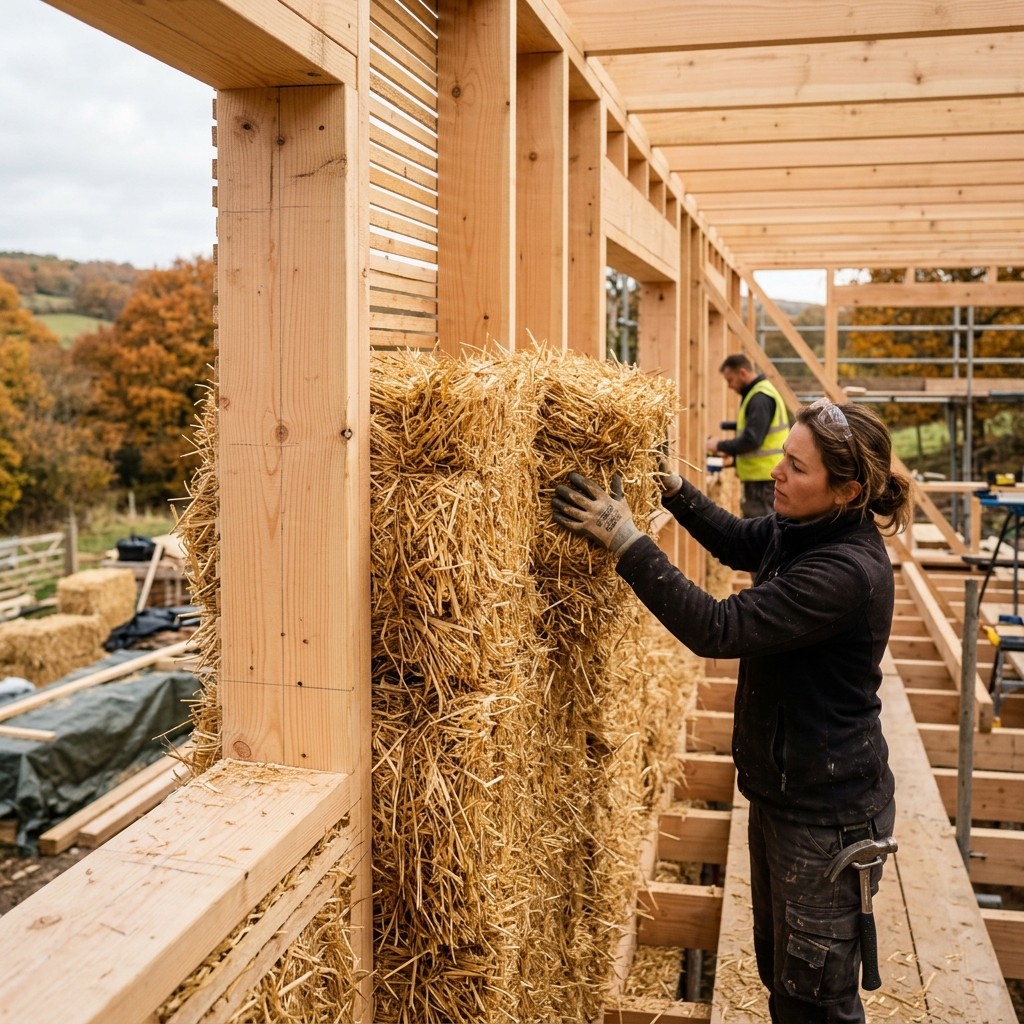
Straw
Straw-bale insulationStraw bales offer very good thermal insulation. As an agricultural by-product, straw is locally available, binds CO₂ while growing and is fully compostable at the end of its life.
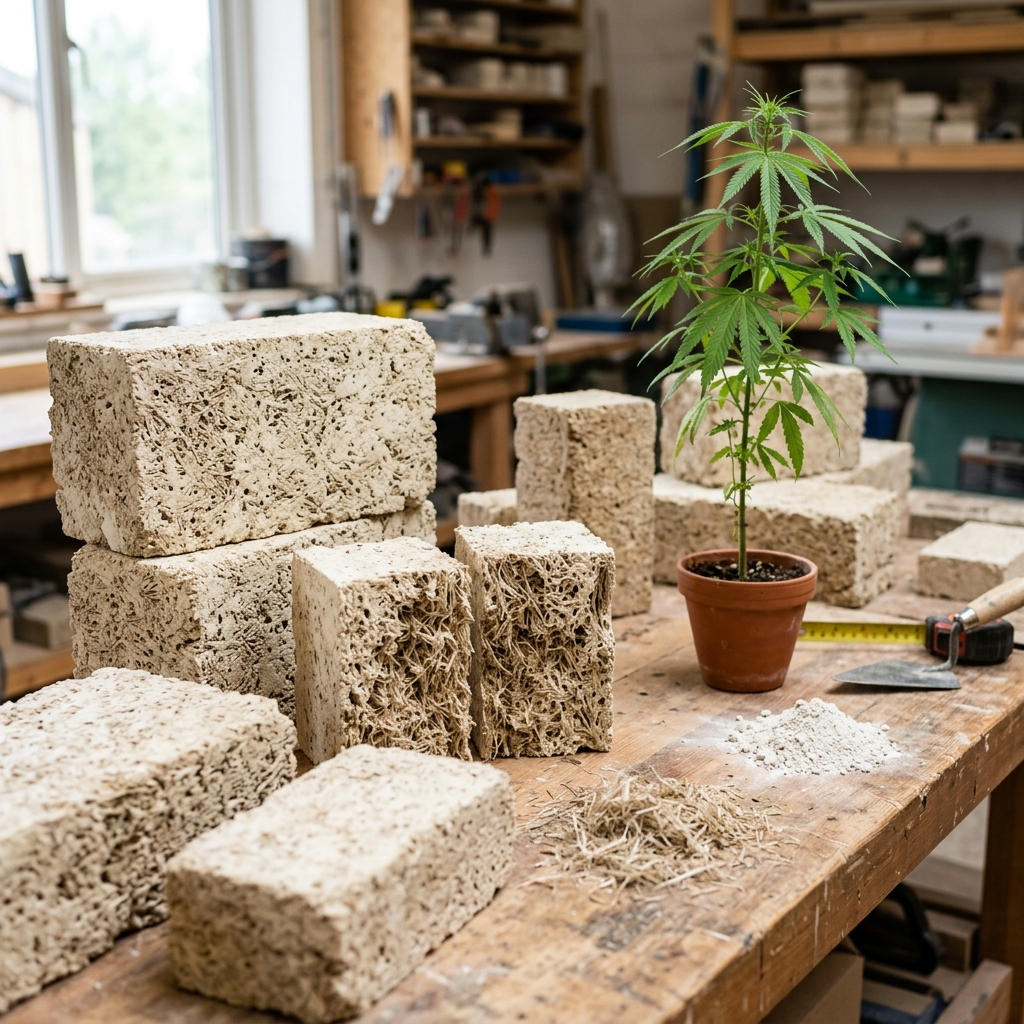
Hemp-lime
Hempcrete · Hemp shivesHemp-lime combines the insulating performance of hemp shives with the thermal mass of natural lime. The material is vapour-open, mould-resistant and acts as a CO₂ sink. At end of life it can be crushed and reused as aggregate or composted.
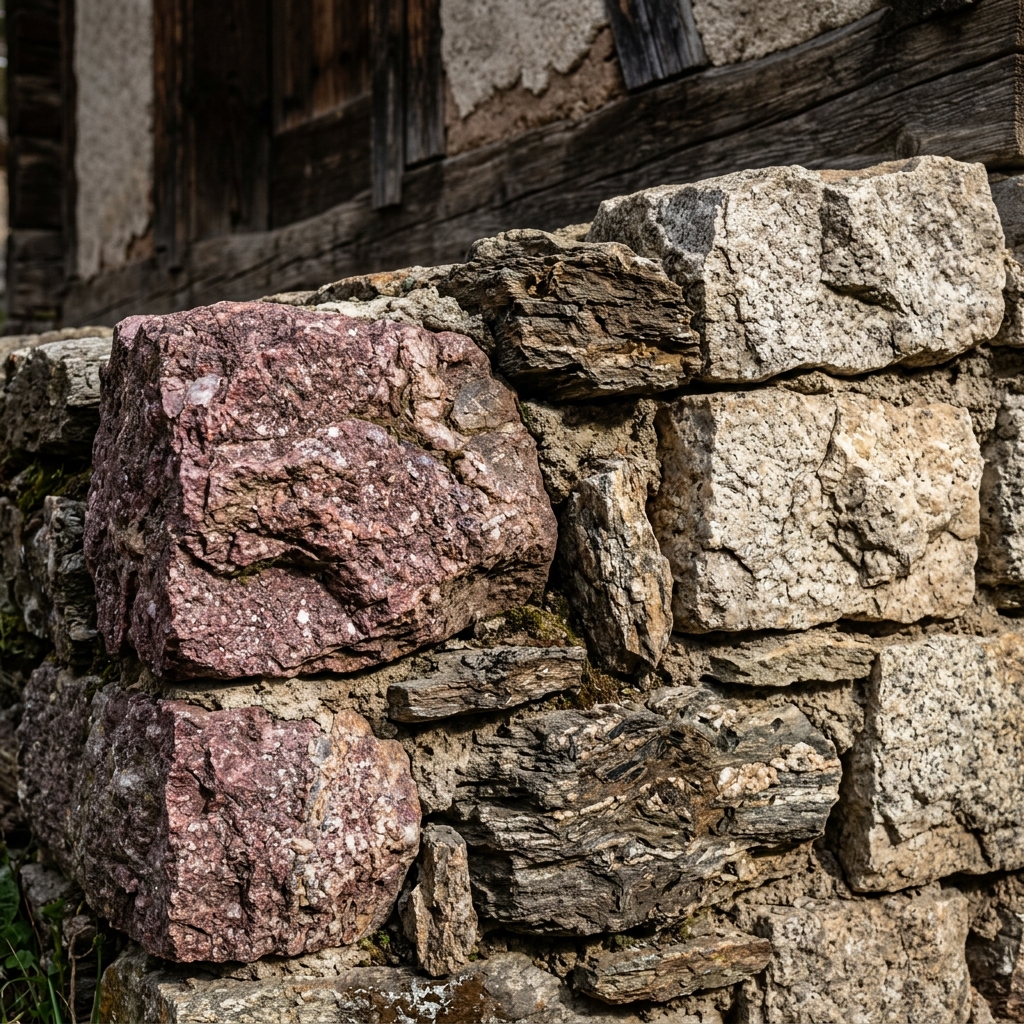
Natural stone
Porphyry · Dolomite · GneissNatural stone from South Tyrolean quarries offers high thermal mass and a virtually unlimited lifespan. Porphyry, dolomite and gneiss have been part of Alpine architecture for centuries and can be reused without loss of quality.
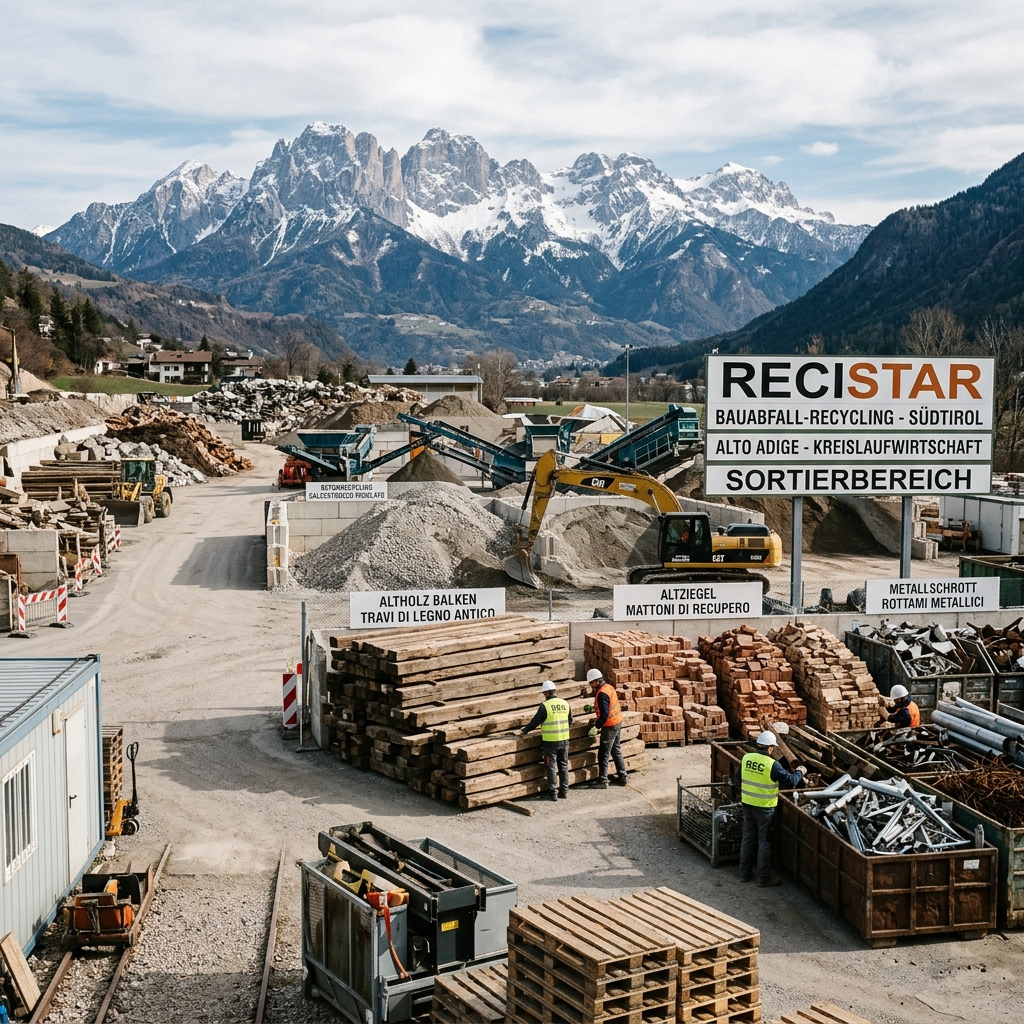
Recycled aggregates
RC concrete · Reclaimed wood · BrickDemolition materials from existing buildings are mapped, tested and used as aggregates in new building materials – a contribution to closed material cycles in the region.
Newly researched in the real-world lab.
Two material systems are newly developed in the project and tested in the Modular Houses under real conditions. Test procedures, results and life cycle assessment (LCA) will be added here as the project progresses.
Glue-free timber frame wall
A novel timber frame wall that largely avoids adhesives and synthetic sealing systems. Goal: airtight, resource-efficient and separable by material type at end of life – with reduced pollutant emissions and a healthy indoor climate.
Testing to followClay and wood-shaving insulation
An insulation material made of clay and wood shavings, a by-product of local wood-processing companies. It strengthens regional material cycles, shortens transport distances and can regulate moisture and improve the indoor climate.
Testing to follow